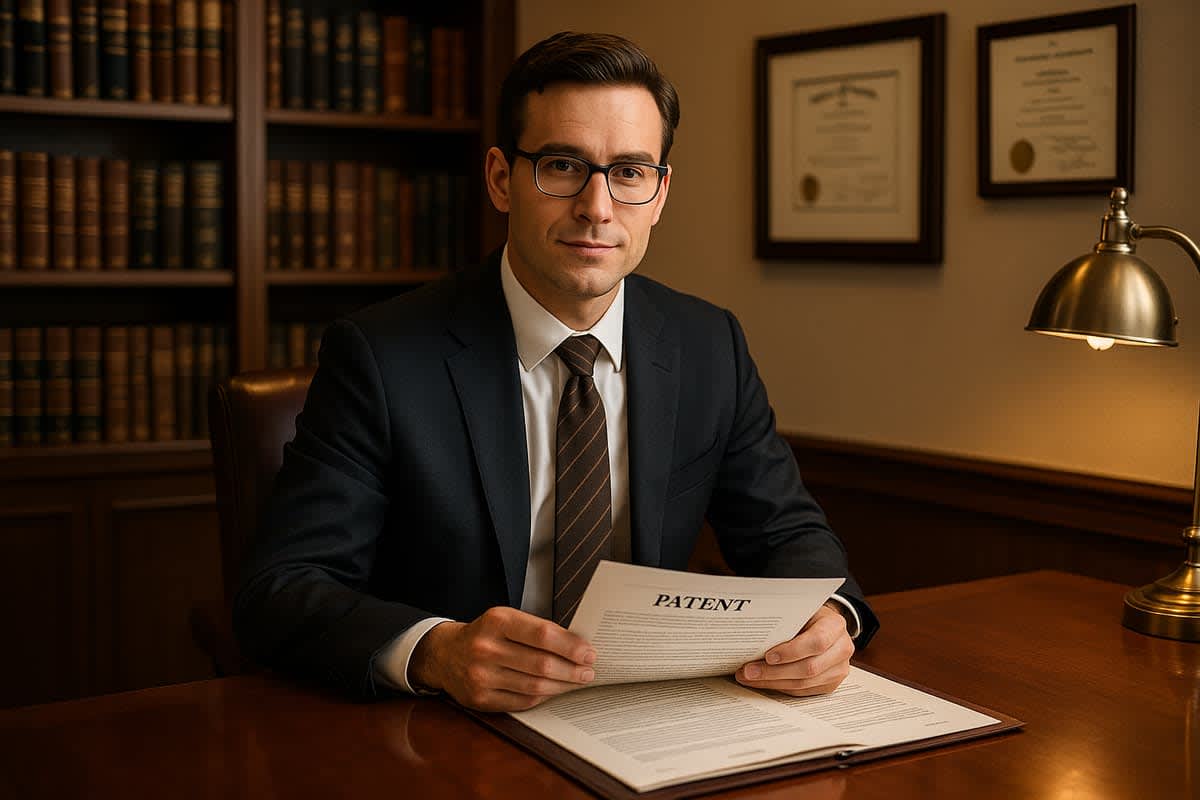
How much does an intellectual property lawyer cost?
How much does an intellectual property lawyer cost?
$250 – $600 per hour
$8,000 – $20,000 per utility patent application
$500 – $2,000 per trademark registration

Average intellectual property lawyer cost
Intellectual property (IP) lawyers typically charge $250 to $600 per hour, with most businesses and individuals paying between $300 and $450 per hour for standard IP legal services. Total project costs vary widely depending on the type of intellectual property involved, ranging from $500 to $2,000 for a simple trademark registration to $10,000 to $20,000+ for a complex patent application. IP litigation can cost significantly more, often reaching $100,000 to $5 million+ depending on the stakes and complexity of the case.
| IP Service | Average Cost |
|---|---|
| Hourly rate (IP attorney) | $250 – $600 per hour |
| Trademark registration | $500 – $2,000 |
| Copyright registration | $300 – $1,000 |
| Provisional patent application | $2,000 – $5,000 |
| Utility patent application | $8,000 – $20,000+ |
| Design patent application | $2,500 – $6,000 |
| IP licensing agreement | $2,000 – $10,000 |
| Cease and desist letter | $500 – $2,000 |
| IP litigation (through trial) | $100,000 – $5,000,000+ |
Whether you're filing a patent for a new invention, registering a trademark for your brand, or defending your creative work against infringement, understanding IP lawyer costs upfront helps you budget effectively and avoid surprises. Several factors influence what you'll pay, including the attorney's experience, the complexity of your matter, your geographic location, and the fee structure used.
IP lawyer hourly rates
Most intellectual property attorneys bill by the hour, with rates that vary based on their experience level, the size of their firm, and the market they practice in. The national average hourly rate for an IP lawyer falls between $300 and $450, though specialists at large firms in major cities can charge $600 to $1,000+ per hour.
| Attorney Experience Level | Typical Hourly Rate |
|---|---|
| Junior associate (1–3 years) | $200 – $350 |
| Mid-level associate (4–7 years) | $300 – $500 |
| Senior associate (8+ years) | $400 – $600 |
| Partner | $500 – $1,000+ |
| Solo practitioner | $200 – $400 |
| Patent attorney (specialized) | $350 – $700 |
Patent attorneys tend to command higher hourly rates than trademark or copyright lawyers because they must also pass the USPTO patent bar exam and typically hold advanced degrees in science or engineering. A patent attorney with a Ph.D. in electrical engineering, for instance, may bill $500 to $700 per hour or more.
Geographic location also plays a significant role. Attorneys in New York, San Francisco, or Washington, D.C. generally charge 20% to 50% more than lawyers in smaller markets. However, many IP matters can be handled remotely, which means you may be able to hire a qualified attorney in a lower-cost market without sacrificing quality.
Patent attorney costs
Patents are typically the most expensive form of intellectual property protection. A complete utility patent application costs $8,000 to $20,000+ in attorney fees alone, not including USPTO filing fees. The total cost from initial filing through issuance often reaches $15,000 to $30,000 or more when you factor in office action responses, amendments, and government fees.
| Patent Service | Attorney Fees | USPTO Fees (Small Entity) |
|---|---|---|
| Provisional patent application | $2,000 – $5,000 | $160 – $320 |
| Utility patent (simple/mechanical) | $8,000 – $12,000 | $800 – $1,600 |
| Utility patent (complex/software) | $12,000 – $20,000+ | $800 – $1,600 |
| Utility patent (biotech/pharma) | $15,000 – $30,000+ | $800 – $1,600 |
| Design patent application | $2,500 – $6,000 | $480 – $960 |
| Patent search and opinion | $1,500 – $3,500 | N/A |
| Office action response | $1,500 – $5,000 | N/A |
| Patent maintenance fees (per period) | N/A | $800 – $3,760 |
Provisional patent applications offer a less expensive entry point at $2,000 to $5,000 in attorney fees. They establish an early filing date and give you 12 months to file a full utility application. While less formal, a well-drafted provisional application still requires thorough technical disclosure.
Design patents protect the ornamental appearance of a functional item and are less costly than utility patents. Attorney fees for design patents typically run $2,500 to $6,000 since the application relies heavily on drawings rather than written claims.
The USPTO offers reduced filing fees for "small entities" (fewer than 500 employees) and "micro entities" (income below a certain threshold with fewer than four previously filed patent applications). Micro entity status can reduce government fees by 80%, saving you thousands of dollars over the life of a patent.
Most patent applications receive at least one office action (a rejection or request for clarification from the patent examiner), and each response costs $1,500 to $5,000 in additional attorney fees. Budget for at least one or two office action responses when estimating your total patent costs.
Trademark attorney costs
Trademark registration is considerably more affordable than patent protection. Attorney fees for a standard trademark application range from $500 to $2,000 per class of goods or services, plus USPTO filing fees of $250 to $350 per class.
| Trademark Service | Typical Cost |
|---|---|
| Comprehensive trademark search | $500 – $1,500 |
| Trademark application (per class) | $500 – $2,000 |
| USPTO filing fee (TEAS Plus, per class) | $250 |
| USPTO filing fee (TEAS Standard, per class) | $350 |
| Office action response | $500 – $2,000 |
| Statement of use filing | $300 – $800 |
| Trademark renewal (every 10 years) | $500 – $1,000 |
| Trademark opposition proceeding | $10,000 – $50,000+ |
Before filing a trademark application, most attorneys recommend a comprehensive trademark search costing $500 to $1,500. This search reviews federal and state registrations, common law uses, and domain names to assess whether your desired mark is likely to face conflicts. Skipping this step can result in a rejected application or future infringement disputes.
The total cost of a straightforward trademark registration (search, filing, and through registration) typically runs $1,000 to $3,500 when no objections arise. If the USPTO issues an office action, expect to pay an additional $500 to $2,000 per response.
Trademark opposition proceedings, where another party challenges your application before the Trademark Trial and Appeal Board (TTAB), significantly increase costs. These proceedings resemble simplified litigation and can cost $10,000 to $50,000+ depending on their complexity.
Copyright attorney costs
Copyright registration is the most affordable type of IP protection to obtain. Attorney fees for a basic copyright registration are $300 to $1,000, with U.S. Copyright Office filing fees of $45 to $65 for a standard online application.
| Copyright Service | Typical Cost |
|---|---|
| Copyright registration (single work) | $300 – $800 |
| Copyright registration (group of works) | $500 – $1,500 |
| Copyright Office filing fee | $45 – $65 |
| DMCA takedown notice | $200 – $1,000 |
| Copyright licensing agreement | $1,000 – $5,000 |
| Copyright infringement lawsuit | $20,000 – $250,000+ |
Many individuals and small businesses can handle straightforward copyright registrations without an attorney. However, legal counsel becomes valuable for complex situations like registering software code, group registrations, work-for-hire agreements, or when dealing with joint authorship issues.
Copyright infringement disputes can range from a simple DMCA takedown notice ($200 to $1,000) to full federal litigation costing $20,000 to $250,000+. Registering your copyright before infringement occurs is critical because it makes you eligible for statutory damages and attorney's fees, which can significantly improve your litigation position.
IP litigation costs
Intellectual property litigation is among the most expensive types of legal disputes. According to the American Intellectual Property Law Association (AIPLA) surveys, patent infringement cases with more than $25 million at risk regularly exceed $3 million to $5 million in total legal costs through trial. Even smaller IP disputes can cost tens of thousands of dollars.
| Type of IP Litigation | Estimated Cost Through Trial |
|---|---|
| Patent infringement (less than $1M at risk) | $500,000 – $1,000,000 |
| Patent infringement ($1M–$25M at risk) | $1,500,000 – $3,000,000 |
| Patent infringement ($25M+ at risk) | $3,000,000 – $5,000,000+ |
| Trademark infringement | $120,000 – $750,000+ |
| Copyright infringement | $20,000 – $250,000+ |
| Trade secret misappropriation | $100,000 – $2,000,000+ |
These figures represent total attorney fees and costs, including discovery, depositions, expert witnesses, and trial preparation. Most IP lawsuits settle before trial, which can reduce costs by 30% to 60% compared to going through a full trial.
The discovery phase alone, which involves exchanging documents, taking depositions, and reviewing technical evidence, often accounts for 50% to 70% of total litigation costs. In patent cases, this phase can require hiring technical experts at $300 to $800 per hour.
Before pursuing IP litigation, explore alternatives like cease and desist letters ($500 to $2,000), mediation ($5,000 to $20,000), or arbitration ($10,000 to $50,000). These approaches can resolve disputes faster and at a fraction of full litigation costs.
IP lawyer fee structures
Intellectual property attorneys use several fee structures depending on the type of work involved. Understanding these arrangements helps you choose the best option for your budget and legal needs.
| Fee Structure | Best For | Typical Arrangement |
|---|---|---|
| Hourly billing | Complex or unpredictable matters | $250 – $600+ per hour |
| Flat fee | Trademark and patent filings | Fixed price per project |
| Contingency fee | IP infringement lawsuits | 25% – 40% of recovery |
| Retainer | Ongoing IP portfolio management | $1,000 – $10,000+ per month |
| Hybrid | Litigation with uncertain outcomes | Reduced hourly + contingency |
Hourly billing
Hourly billing is the most common fee arrangement for IP lawyers, especially for litigation, complex transactions, and advisory work. You pay for the actual time spent on your matter, which provides flexibility but can make total costs unpredictable. Request detailed billing statements and ask for cost estimates at each phase of your case.
Flat fees
Many IP attorneys offer flat fees for routine, well-defined tasks such as trademark applications, patent filings, copyright registrations, and licensing agreements. Flat fees provide cost certainty, making them ideal for budget-conscious clients. Be sure to clarify what the flat fee includes, as office action responses and additional filings are often billed separately.
Contingency fees
Some IP litigation attorneys work on a contingency basis, meaning they receive a percentage of the recovery (25% to 40%) if you win or settle your case. If you lose, you pay nothing in attorney fees, though you may still owe costs for filing fees, expert witnesses, and other expenses. Contingency arrangements are most common in plaintiff-side infringement cases with strong merits and significant potential damages.
Monthly retainers
Businesses with ongoing IP needs, such as portfolio management, brand monitoring, or regular contract review, may benefit from a monthly retainer arrangement. Retainers typically range from $1,000 to $10,000+ per month and provide a set number of hours or services each month. This approach offers predictable budgeting and ensures your attorney is readily available.
Factors that affect IP lawyer costs
Several variables determine what you'll ultimately pay for intellectual property legal services. Understanding these factors helps you anticipate costs and make informed decisions about where to invest your legal budget.
| Factor | Impact on Cost |
|---|---|
| Complexity of the IP matter | More complex inventions or disputes increase costs significantly |
| Type of intellectual property | Patents cost more than trademarks; trademarks cost more than copyrights |
| Attorney experience and reputation | Senior partners and specialists charge higher rates |
| Firm size | Large firms charge 30% to 100% more than solo practitioners |
| Geographic location | Major metro areas command premium rates |
| Urgency | Rush filings and expedited work increase costs |
| International filings | Each additional country adds $2,000 to $10,000+ |
| Prosecution history | Multiple office actions add $1,500 to $5,000 each |
Complexity
The technical complexity of your IP matter is the single biggest cost driver. A simple mechanical device patent costs significantly less than a complex software algorithm or biotechnology patent because the latter requires more research, more detailed claims, and often more rounds of prosecution with the patent office.
Attorney experience
Experienced attorneys charge higher hourly rates, but they also tend to work more efficiently. A senior patent attorney may draft a patent application in 20 hours at $500 per hour, while a junior attorney might take 40 hours at $275 per hour. The total costs could be similar, but the quality and strategic value often favor the experienced attorney.
Geographic location
IP attorney rates vary substantially by region. Attorneys in New York City, San Francisco, and Washington, D.C. typically charge $400 to $1,000+ per hour, while equally qualified attorneys in smaller cities like Des Moines, Raleigh, or Boise may charge $200 to $400 per hour. Since most IP work can be performed remotely, hiring an attorney in a lower-cost market is a viable cost-saving strategy.
International IP protection
Protecting intellectual property internationally multiplies costs quickly. Filing a patent through the Patent Cooperation Treaty (PCT) costs $4,000 to $8,000 for the international phase, and entering each national phase adds $3,000 to $10,000+ per country, including local attorney fees and translation costs. International trademark registration through the Madrid Protocol is more affordable at $2,000 to $5,000 for multiple countries.
How to reduce IP lawyer costs
There are several practical strategies to manage and reduce your intellectual property legal expenses without sacrificing quality protection.
- Do preliminary research yourself: Conduct initial patent or trademark searches using the USPTO's free databases (TESS for trademarks, PatFT and AppFT for patents) before engaging an attorney. This helps you avoid paying for a full search on a mark or invention that clearly conflicts with existing IP.
- Use flat-fee arrangements: For routine filings like trademark applications and simple patent applications, negotiate a flat fee rather than hourly billing. This eliminates cost uncertainty and often results in lower total fees.
- Prepare thorough documentation: Provide your attorney with well-organized invention disclosures, brand descriptions, or evidence of infringement. The more prepared you are, the less time your attorney spends gathering information at billable rates.
- Consider solo practitioners or boutique firms: Small IP firms and solo practitioners often provide the same quality of work as large firms at 30% to 50% lower rates. They also tend to offer more personalized attention.
- File provisionally first: If you're unsure about pursuing a full patent, file a provisional application for $2,000 to $5,000 to secure your filing date. This gives you 12 months to evaluate the market before committing to the full $10,000 to $20,000+ utility patent cost.
- Bundle services: If you need multiple filings (for example, a trademark and several patents), negotiating a bundled rate with one firm can reduce overall costs.
- Leverage micro entity or small entity status: Qualifying for reduced USPTO fees can save 50% to 80% on government filing, search, and examination fees.
When to hire an IP lawyer
Not every intellectual property matter requires an attorney. Simple copyright registrations and basic trademark applications can sometimes be handled independently. However, certain situations strongly call for professional legal guidance.
- Patent applications: Patent prosecution is technically demanding and strategically complex. Filing without an attorney (pro se) frequently results in weak patents that provide limited protection or applications that are ultimately rejected.
- Receiving a cease and desist letter: If you've been accused of infringing someone else's IP, an attorney can evaluate the claim's merit and advise on the best response strategy.
- IP infringement: Whether you're enforcing your rights or defending against a claim, litigation requires experienced legal representation.
- Licensing and assignment agreements: IP licensing deals involve complex royalty structures, territorial restrictions, and sublicensing rights that require careful drafting to protect your interests.
- International filing: Navigating foreign IP systems involves different laws, languages, and procedures that require specialized knowledge.
- Startup IP strategy: Establishing a comprehensive IP strategy early, including what to patent, trademark, and keep as trade secrets, can save significant money and legal headaches down the road.
Many IP attorneys offer free initial consultations lasting 15 to 30 minutes. Law school IP clinics also provide free or low-cost services for qualifying individuals and small businesses. Organizations like Volunteer Lawyers for the Arts (VLA) connect creators with pro bono IP attorneys.
Frequently asked questions
How much does a patent lawyer cost?
Patent lawyers typically charge $8,000 to $20,000+ for a utility patent application, $2,500 to $6,000 for a design patent, and $2,000 to $5,000 for a provisional patent. These figures represent attorney fees only. USPTO filing fees, maintenance fees, and office action responses add to the total cost. Complex patents in biotechnology or software fields can exceed $30,000 in total attorney fees.
Can I file a patent or trademark without a lawyer?
Yes, you can file pro se (without an attorney) for both patents and trademarks. The USPTO allows individuals to file their own applications. However, patent applications filed without an attorney have a significantly lower allowance rate, and errors in trademark applications can result in costly refusals. For straightforward trademark applications, self-filing is more feasible than for patents.
Do IP lawyers offer free consultations?
Many intellectual property attorneys offer free initial consultations, typically lasting 15 to 30 minutes. During this meeting, the attorney evaluates your situation, outlines potential strategies, and provides a rough cost estimate. Use this opportunity to assess the attorney's experience, communication style, and fee structure before committing.
What is the cheapest type of IP protection?
Copyright registration is the least expensive form of IP protection, costing $300 to $1,000 in attorney fees plus $45 to $65 in Copyright Office filing fees. In many cases, individuals can file copyright applications themselves without an attorney, reducing the cost to just the government filing fee. Copyright protection also arises automatically upon creation, though registration provides important legal advantages.
How long does IP registration take?
Trademark registration typically takes 8 to 12 months if no oppositions arise. Patent applications average 18 to 36 months from filing to issuance, though complex cases can take longer. Copyright registration currently takes 3 to 10 months for online applications. These timelines affect total costs because longer prosecution periods may require additional attorney time and responses.
Is it worth hiring an expensive IP lawyer?
The value of an IP lawyer depends on what's at stake. For a startup whose core business relies on a patented technology, investing $15,000 to $20,000 in a top patent attorney can be well worth it. For a small business registering a single trademark, a competent solo practitioner charging $500 to $1,000 may provide perfectly adequate service. Match the attorney's cost and experience level to the complexity and financial significance of your IP matter.